

AAC page
What Is Augmentative and Alternative Communication (AAC)?
Children communicate in many ways, from spoken words and gestures to facial expressions and eye contact. When a child has difficulty communicating verbally or is developing speech at a different pace, it can be frustrating for both the child and their family. Augmentative and alternative communication (AAC) can help bridge that gap.
AAC includes tools and strategies that support or replace spoken communication, helping children express their wants, needs, thoughts, and feelings. Every AAC approach is personalized to a child’s unique abilities and communication needs. Some children use AAC temporarily, while others benefit from it long-term. The goal is to help every child communicate as confidently and effectively as possible.
Types of AAC
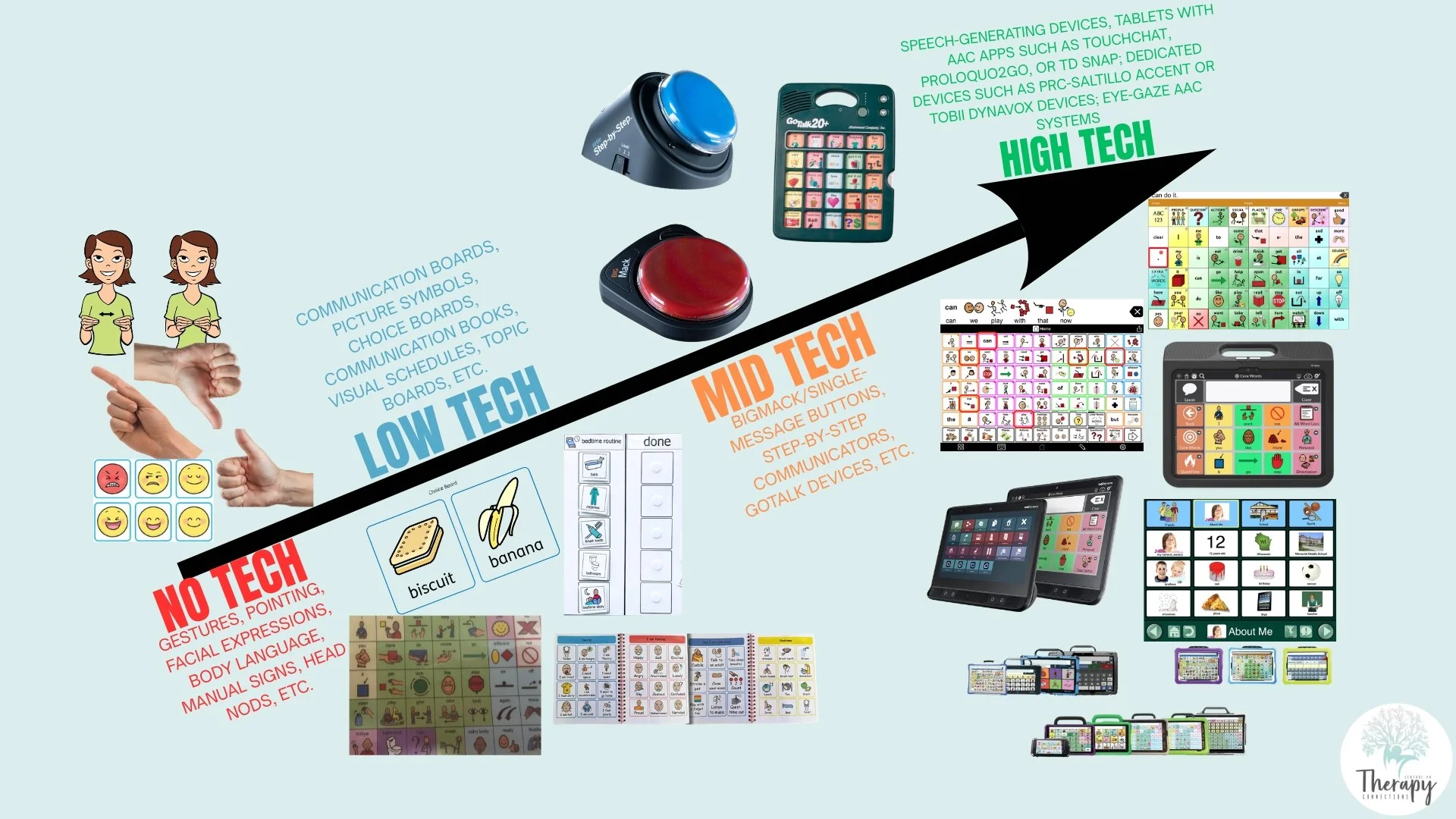
AAC can look different for every child depending on their communication needs and abilities. It may include a variety of tools and methods, such as:
Pictures and symbols
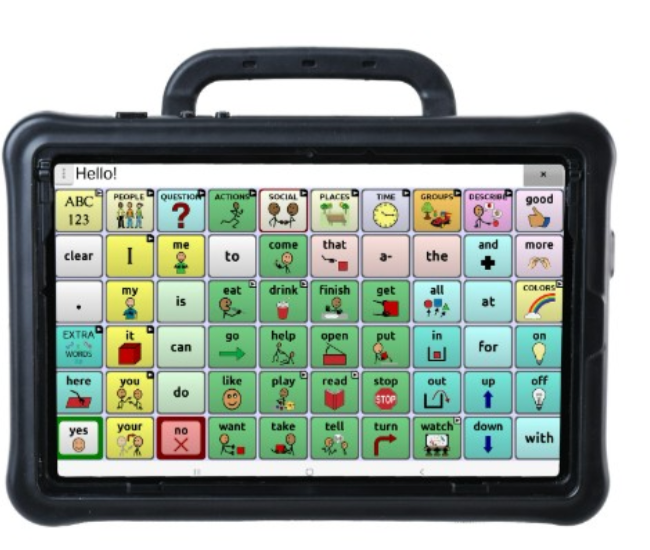
Speech-generating devices
Communication apps and computer programs
Written words and text
Sign language
Eye gaze and shared glances
Touch
Gestures and body movements
Facial expressions
AAC can be high-tech or low-tech, and many children use a combination of methods to communicate throughout their day.
How Can AAC Help Your Child?
AAC can support your child’s communication in a variety of situations, including:
Supporting early communication development when your child is not meeting typical communication milestones.
Providing an alternative way to communicate when speech has been lost or has not yet developed.
Helping your child express their wants, needs, and thoughts when verbal communication is limited or temporarily unavailable, such as when a child is intubated.
Making communication easier when your child’s speech is difficult for others to understand.
AAC helps children communicate more effectively, participate in everyday activities, and connect with the people around them.
Who Can Benefit from AAC?
AAC can benefit children who have difficulty with speech, language, movement, or accessing communication tools. It can support children with:
Speech and language delays or disorders
Limited or absent spoken language
Speech that is difficult to understand
Autism spectrum disorder
Cerebral palsy or Down syndrome
Developmental delays or intellectual disabilities
Genetic, neurological, or motor disorders
Temporary medical conditions that affect speech, such as intubation or a tracheostomy
Every child is different, and a specific diagnosis is not required to benefit from AAC.
How We Can Help
Our speech-language pathologists work with families to explore AAC tools and strategies tailored to each child's needs, helping them express their wants, needs, thoughts, and feelings more effectively.
AAC Evaluation
Our speech-language pathologists (SLPs) use a process called feature matching to identify the best AAC system for your child based on their individual strengths, needs, and preferences.
The evaluation considers your child’s speech and language skills, motor abilities, sensory needs, learning abilities, daily environments, and family goals to find a communication system that works best for them.
AAC treatment
AAC treatment helps children build communication skills and use their chosen system confidently in everyday life. Our team supports your family through:
Device Trials: Exploring different AAC tools to find the best fit.
Therapy: Practicing AAC to communicate wants, needs, thoughts, and feelings.
Customization: Setting up and personalizing the chosen communication system.
Caregiver Training: Helping families learn how to support AAC use at home and in the community.
Our goal is to help your child communicate more effectively and participate more fully in everyday activities.
AAC Frequently Asked Questions
-
No. AAC can support children with a range of speech abilities, including those who speak some words but need additional communication support.
-
No. AAC can be introduced alongside speech therapy to support communication right away.
-
No. AAC can support language development and may encourage spoken communication while giving children another way to express themselves.
How Can We Help?
Wondering if AAC is right for your child? Our speech-language pathologists are here to help!
Contact us to learn more or schedule an evaluation.
717-926-8182 | info@cpatherapyconnections.com